


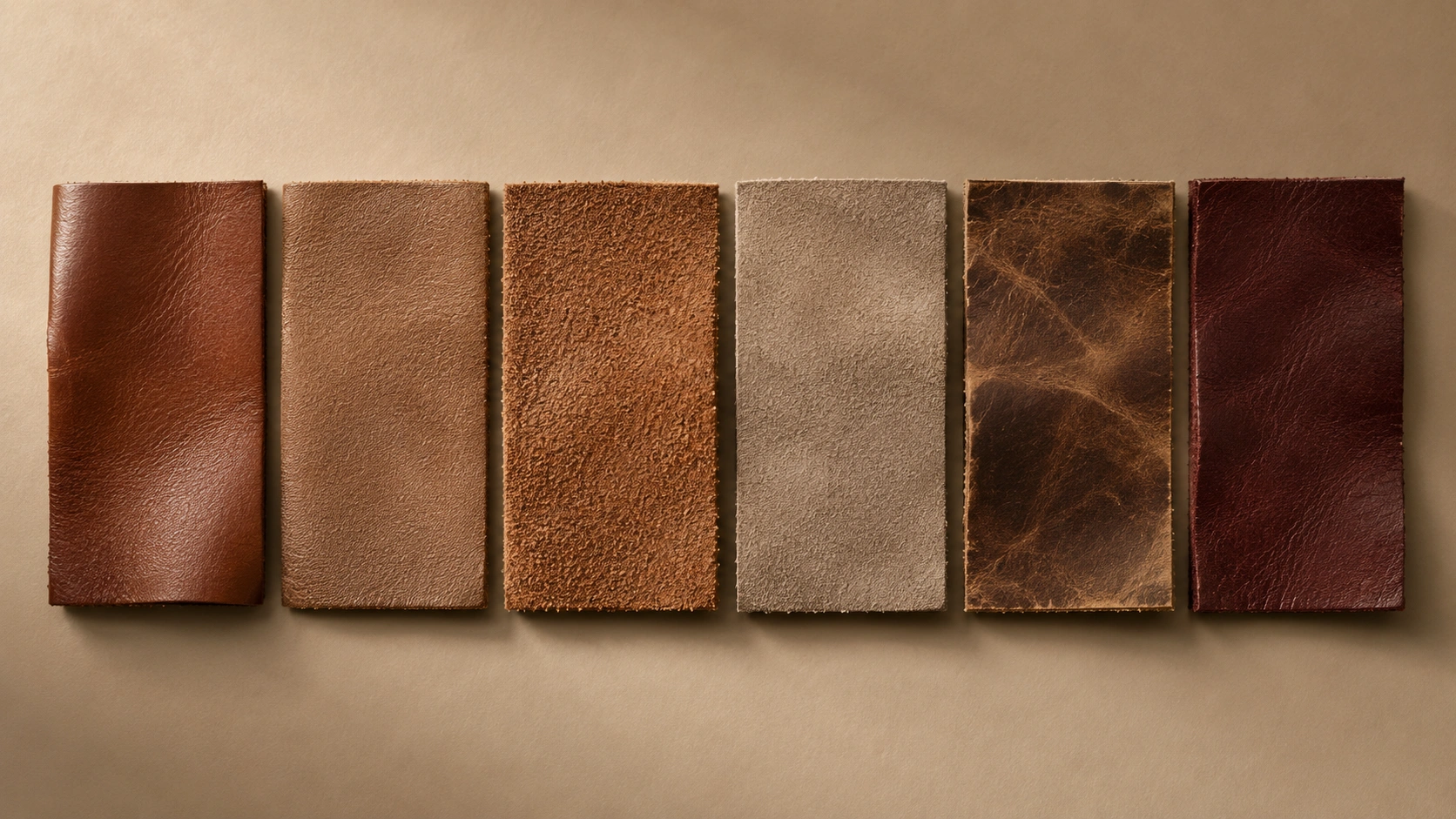
“Leather” covers a wide range of materials that differ in how they are made, how they wear, and what they suit. This guide walks through the main types you will see on product pages, in plain terms, so you know what you are actually buying.
How leather is graded
Leather is graded by how much of the original hide is used and how it is finished. This matters more than the animal it came from for how the leather looks, feels and lasts.
Full-grain leather
Full-grain uses the top layer of the hide with nothing sanded or buffed away, so the natural grain, pores and small marks stay visible. It is the strongest and most durable grade, and it develops a patina, a gradual darkening and softening, with age and handling. Jackets, bags and work aprons built to last are usually full-grain.
Top-grain leather
Top-grain also comes from the top layer, but the surface is lightly sanded and given a finish coat to even out marks. It is more uniform looking and often softer to the touch than full-grain, at a small cost to long-term durability. It is a common choice for jackets and bags where a cleaner look matters.
Genuine leather
Despite the name, “genuine leather” is actually a lower grade. It is made from the layers left over after the top grain is split away, then coated and embossed to look like a higher grade. It is real leather, but it wears faster and does not develop the same patina.
Leather by animal and finish
Lambskin
Lambskin is soft, light and drapes close to the body. It is the usual choice for a jacket, shirt or trouser meant to feel more like clothing than armor, and it needs the gentlest care of any leather here.
Sheepskin
Sheepskin sits between lambskin and cowhide: more structure than lambskin, still soft, often finished semi-aniline so the grain shows through. Good for a jacket that should hold its shape.
Cowhide
Cowhide is thick and hard-wearing, the standard for biker jackets, chaps and aprons that need to survive real use. It takes longer to break in than lambskin and holds up better to abrasion.
Buffalo leather
Buffalo hide has a heavier, more pebbled grain than cowhide and slightly more give. It is a common pick for work aprons that need extra thickness without losing flexibility.
Goatskin
Goatskin is light but firm, with a naturally pebbled surface. It sits between lambskin and cowhide in both weight and toughness.
Nubuck
Nubuck is top-grain leather that has been sanded on the grain side to create a soft, velvety nap. It looks similar to suede but comes from the stronger outer layer, so it holds up better.
Suede
Suede is made from the underside of the hide, giving it a soft, brushed texture throughout. It is comfortable and casual, but it marks and absorbs water more easily than a grain-side finish.
Aniline and semi-aniline finishes
Aniline leather is dyed all the way through with no surface coating, so the natural texture and any marks in the hide stay visible. Semi-aniline adds a very light protective coat, keeping most of that natural look while resisting stains a little better. Both are used to describe how a hide like cowhide or sheepskin has been finished, not a separate type of leather.
Distressed and pull-up finishes
Distressed leather is treated to look worn from day one, with uneven color and a broken-in texture. A pull-up finish uses oils and waxes that lighten in color when the leather flexes or stretches, so the jacket or apron shows lighter creases at the elbows and knees over time. Both age well and hide scuffs better than a smooth, evenly dyed hide.
Which leather should you choose
- For a jacket worn mostly around town: lambskin or sheepskin, for softness and an easy drape.
- For a biker jacket, chaps or anything that takes real wear: cowhide or buffalo, for toughness.
- For a work apron: full-grain cowhide for general use, buffalo where extra heat or spark resistance matters.
- For a bag or briefcase you want to age well: full-grain, so it develops a patina instead of just wearing out.
Each product page on Letherix names the leather and finish used, so you can match it against this guide before you order. Browse the full range in men’s and women’s leather jackets, or the work apron range.